Erosion & Sediment Control in Central Illinois
Practical stabilization and runoff management for residential, commercial and agricultural properties after the ground is disturbed.
Disturbed ground needs a plan before the next rain
Any time vegetation is removed or earth is moved, the exposed surface becomes vulnerable to erosion and runoff. Erosion and sediment control addresses that vulnerability directly: holding soil in place, slowing water across the surface and keeping displaced sediment from reaching drains, ditches, neighboring property or waterways.
Tines Down Property Services offers erosion and sediment control for residential, commercial and agricultural property projects in our Central Illinois service area. Describe the disturbed area, the slope, where water currently flows and what sits downhill or downstream. The goal is to match the method to the actual site rather than apply a generic fix.
Erosion and sediment control does not automatically include engineered stormwater design, permitting or long-term maintenance. It also does not establish universal specifications. The actual slope, soil, drainage patterns and finished condition must guide the scope before stabilization can be coordinated.
Compare with grading and dirt work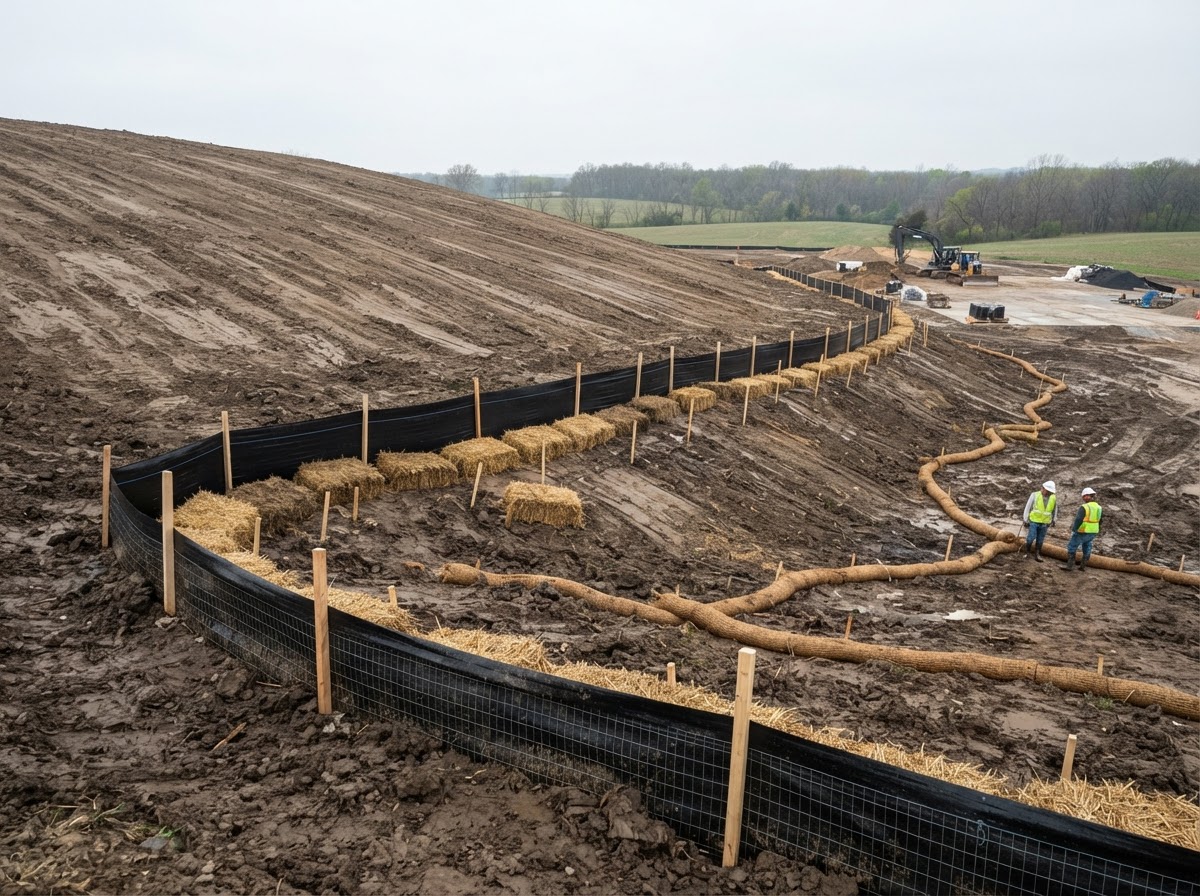
Follow the site from disturbance to stabilization
A planning pathway for managing exposed soil and runoff; project-specific conditions determine the actual work.
Disturbance
Identify the exposed or newly shaped area and how long it will remain unstable.
Flow
Share how water currently moves across the site and where runoff collects or exits.
Stabilization
Resolve the methods, timing and whether measures are temporary or permanent.
Handoff
Clarify the finished surface condition and any ongoing maintenance responsibilities.
Account for where the water goes
Runoff rarely stays within the work area. The proposed stabilization can interact with existing drainage features, neighboring properties, road ditches and downstream areas. Share what you know about how water moves across the site during and after rain so the approach accounts for the actual flow patterns.
Slope, soil type and the amount of exposed surface all influence which stabilization methods make sense. Temporary measures protect a site during construction; permanent measures are intended to last after the project is finished. Records of past drainage work are useful context, but they are not a substitute for looking at how the site behaves now.
Decide how stabilization, runoff management and final surface condition will be handled. The appropriate sequence depends on the project schedule and whether the work is temporary or permanent. An agreed plan helps avoid assuming that a single measure, a finished surface and a maintained site are the same deliverable.
Coordinate with overall site preparation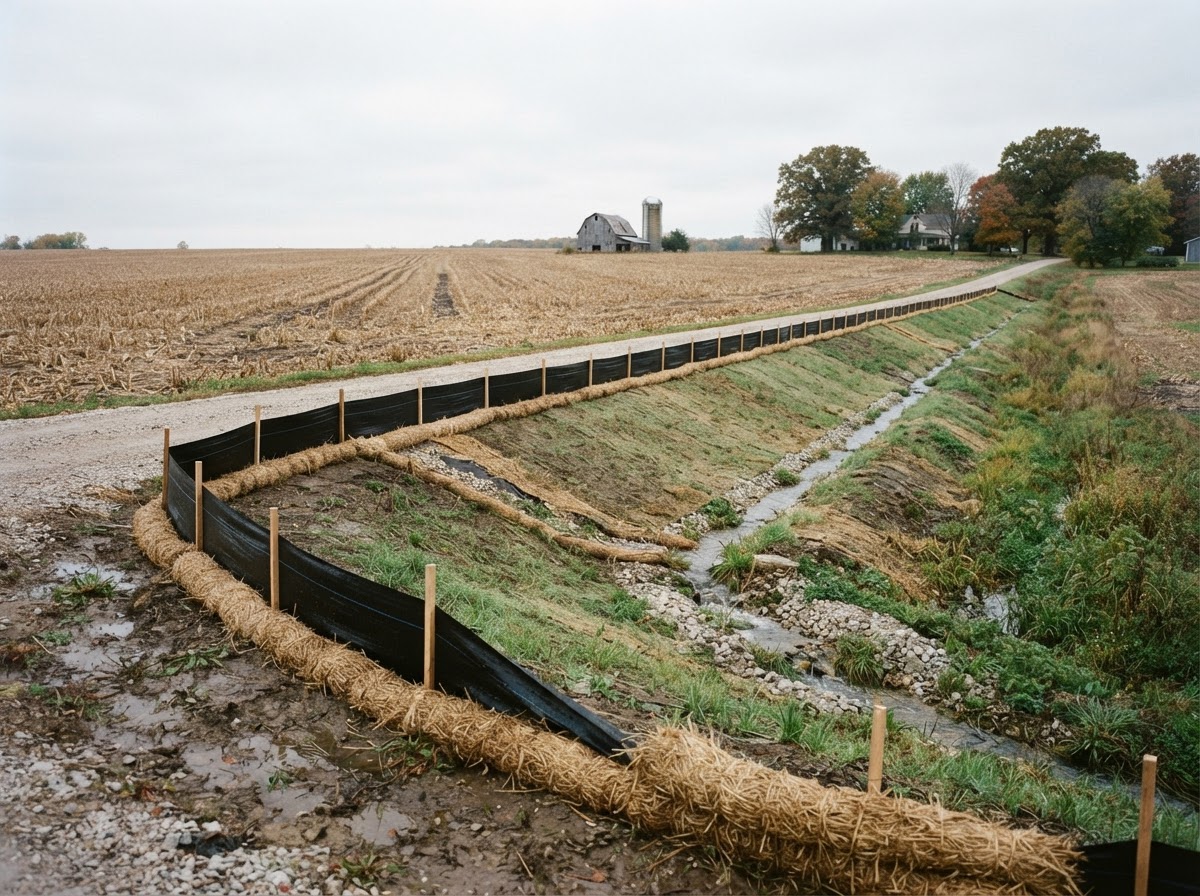
Keep stabilization connected to the whole project
Separate responsibilities should be explicit even when the tasks happen on the same site.
Ground-work scope
Define the earth work that created the exposed surface and its expected finish.
Stabilization methods
Identify which measures apply and whether they are temporary or permanent.
Required checks
Confirm which party coordinates applicable permits, inspections or approvals.
Surface completion
Agree on the final surface condition and any maintenance after stabilization.
What customers have to say
Feedback about working with Tines Down Property Services.
Erosion & Sediment Control: your questions answered
Do not assume permits are included. Identify the responsible party and the actual requirements. Engineered stormwater design, permitting and regulatory approvals may involve separate responsibilities and parties.
Methods must come from the actual slope, soil and drainage conditions. This website does not provide universal specifications or replace project-specific design and site requirements.
It can be either. Temporary measures protect a site during construction; permanent measures are intended to last after the project is finished. Describe the timeline and finished condition so the scope matches the need.
Provide the address, the disturbed area, slope, how water flows across the site and what lies downhill or downstream. Include access constraints, existing drainage features and any known past drainage work.
The handoff should explicitly cover the finished surface and any ongoing maintenance. Some measures require upkeep to keep working, so confirm responsibilities in the project scope rather than assuming them.
Yes. Explain how it relates to clearing, grading, drainage or overall site preparation. Coordinating stabilization early helps define each phase without treating them as interchangeable services.
Talk with us about erosion & sediment control
Share your property location, the work you need and the result you have in mind. Photos, plans and information about the existing conditions can help explain your project.
- Call
- (217) 627-6974
Project inquiry form
Online inquiries will be available here once the form is connected.
For now, call or email us with your property location and the project you have in mind.
Call (217) 627-6974Email Tines Down